Sri Lanka is a gem of an island off the southeastern coast of India. In a mere 25,000 square miles, Sri Lanka is the home to some of the world's largest mammals, such as Blue Whale and Asian Elephants, the largest reptile in the world - the Saltwater Crocodile, more than 30 species of endemic birds, and over 200 endemic plants. On top of biodiversity, Sri Lanka offers an array of beautiful habitats from ocean beaches to misty rain forests and mountainous waterfalls to semi-arid scrublands.
 |
| Udawalawe Lake - Photo by Anna Wittmer |
In March 2020, I'll be heading back to Sri Lanka for the 4th time since my inaugural visit in September of 2018. Sri Lanka is very dear to me, and I am incredibly excited to be able to share a piece of the magic with you. I hope you'll join me on an unforgettable adventure!
 |
| Leopard - Photo © Classic Sri Lanka |
Here's what we're in for:
12 Day, 11 Night Ultimate Island Safari March 14-25, 2020
Day 1: Arrival at Bandaranaike International Airport -
Saturday, March 14, 2020
Arrivals before noon are highly encouraged and will give you
time to check into your hotel and rest before dinner and our first evening
adventures looking for Gray Slender Loris, Red Slender Loris, and Golden Palm
Civet.
 |
| Gray Slender Loris - Photo © Classic Sri Lanka |
After a 3-hour drive to Mirissa, located on the southern
coast, we will check into our hotel before an evening river safari on the
Nilwala River. The Nilwala River is home to one of the largest known
populations of Estuarine Crocodiles. These prehistoric crocodiles are the
largest reptiles on Earth. We will also hope to see a variety of wading birds
and a large population of Indian Flying Foxes as we travel down the river and
into the mangrove wetlands before arriving at the Indian Ocean.
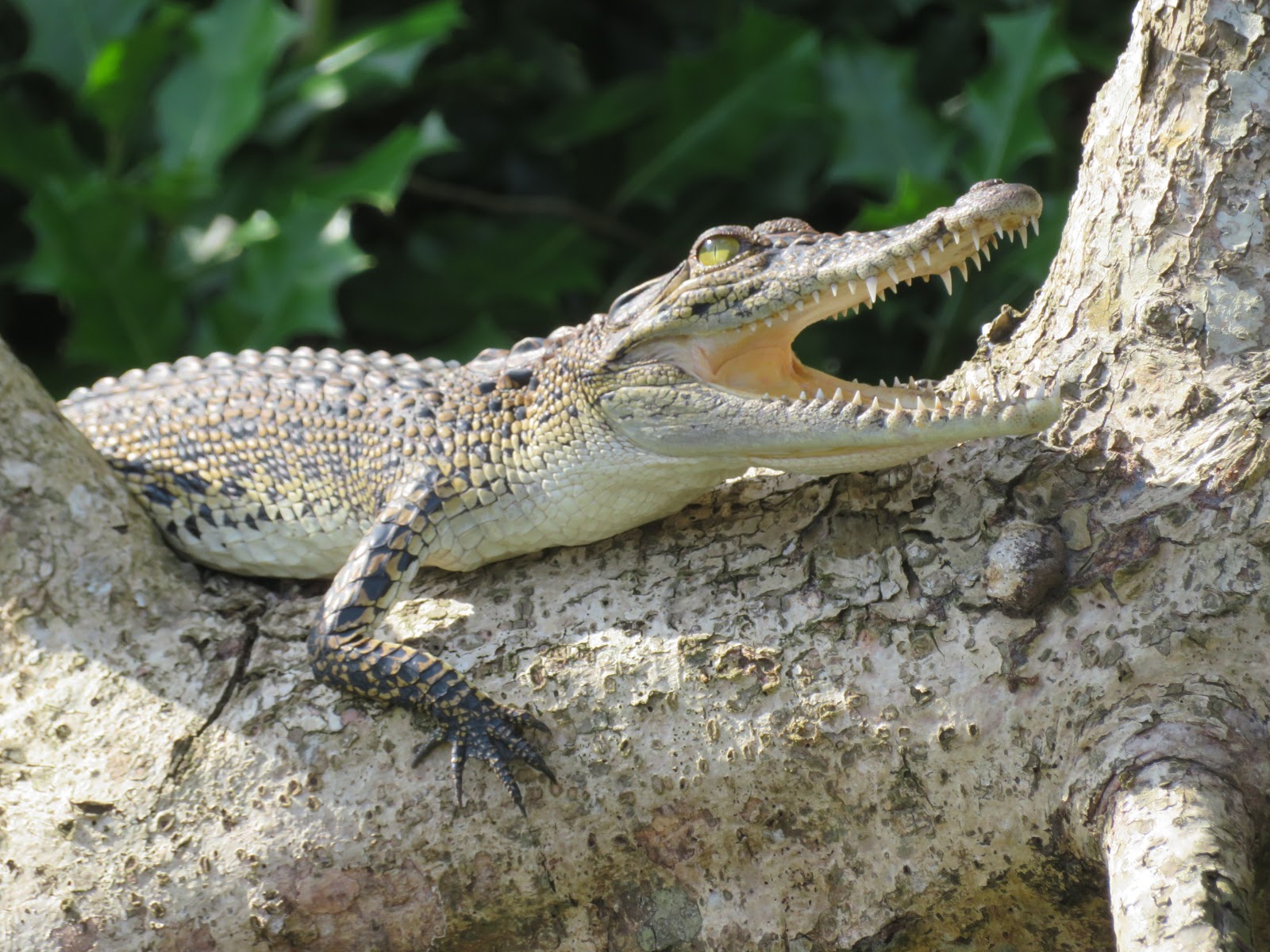 |
| Estuarine (or Saltwater) Crocodile - Photo by Anna Wittmer |
Day 3: AM Mirissa Whale Watching and PM transfer to Sinharaja
Rainforest Reserve
This morning we will checkout from our hotel early with a
packed breakfast. The southern town of Mirissa is known as the “World’s Best”
for Blue Whale sightings from November through April. Some lucky whale watchers
have also spotted Spinner Dolphins, Bryde’s Whales, Sperm Whales, Orcas, Whale
Sharks, Bottlenose Dolphins, and Striped Dolphins. We may even be able to spot
a few sea birds.
 |
| Blue Whale - Photo © Classic Sri Lanka |
Next, we’ll head 3 hours into the interior of Sri Lanka to
the lowland rainforest region. We’ll check into our hotel for the next 2
nights, before spending the evening exploring the forest’s edge.
The Sinharaja Rainforest is the largest tract of natural
rainforest in Sri Lanka, and the home to 28 of the 33 endemic species of birds
in Sri Lanka. Several of these endemics often form mixed feeding flocks, which
can be quite a treat for us! Some highlights of this region include the
recently discovered Serindib Scops-Owl, Sri Lanka Spurfowl, Chestnut-backed
Owlet, and White-faced Starling. In addition to exceptional bird life, we may
also encounter Purple-faced Leaf Monkey, Giant Squirrel, Kangaroo Lizard, and
Hump-nosed Lizard.
 |
| Hump-nosed Lizard - Photo by Anna Wittmer |
Day 4: Full Day in Sinharaja Forest
Today we’ll spend a full day hiking and exploring the
Sinharaja Rainforest. We will search for unique endemic species such as Sri
Lanka Blue Magpie, Red-faced Malkoha, Sri Lanka Spot-winged Thrush, Sri Lanka
Green-billed Coucal, Sri Lanka Gray Hornbill, and many more. Other notable
non-endemic species include Sri Lanka Frogmouth, Malabar Trogon, and Velvet-fronted
Nuthatch. We can also hope to spot the highly cryptic Green Vine Snake. The hike can be steep at times, and the trail is unimproved. If you’re
not feeling up to the hike, you may opt to leisurely explore the beautiful
grounds of the Blue Magpie Lodge. Many endemic birds can be found right on the
hotel property.
 |
| Sri Lanka Blue Magpie with a Keelback Tree Snake - Photo by Anna Wittmer |
 |
| Green Vine Snake - Photo by Anna Wittmer |
 |
| Sri Lanka Frogmouth - Photo by Anna Wittmer |
 |
| Red-faced Malkoha - Photo © Classic Sri Lanka |
Day 5: AM Transfer to Udawalawe National Park for PM Jeep
Safari
This morning we will depart from the lodge and travel to
Udawalawe National Park, one of the best places in Sri Lanka for year-round Asian
Elephant encounters. After checking into our hotel and enjoying lunch, we will
head into the park for our first game drive. While Asian Elephants will be our
primary target, we will also hope to see Gray Langur, Toque Macaque, Jackal,
Mugger Crocodile, and Spotted Deer. Udawalawe is also an excellent park for
dry-zone specialties and raptors such as Crested Hawk-Eagle, Gray-headed Fish-Eagle,
Crested Serpent-Eagle, White-bellied Sea-Eagle, Brown Fish-Owl, Brown Shrike,
Blue-tailed Bee-eater, Malabar Pied-Hornbill, and Rosy Starling.
 |
| Asian Elephants at Udawalawe - Photo by Saranga Dissanayake |
Day 6: AM Udawalawe NP and Transfer to Yala National Park
for PM Safari
An early start will take us back into Udawalawe National
Park for a half-day safari to see more elephants and perhaps even better
birding than last evening.
 |
| Crested Hawk-Eagle - Photo by Anna Wittmer |
 |
| Brown Fish-Owl - Photo by Anna Wittmer |
 |
| Malabar Pied-Hornbill courtship - Photo by Anna Wittmer |
We will return to our hotel to check out and make the
two-hour transfer to Yala National Park. Yala is the country’s premier
destination for wildlife viewing, with the star undoubtedly being the Leopard. Yala Block I is believed to have the highest concentration of leopards
in the world. However, due to the elusive nature of these big cats, we sill
spend a considerable amount of time in the park to increase our chances of
memorable encounters with one. While searching for the leopards, we may also encounter the
endangered Sloth Bear, as well as tusker elephants, Sambar Deer, Spotted Deer,
Wild Water Buffalo, and Wild Boar. Nearly 300 avian species have been recorded in
Yala National Park in variable habitats from lagoons and beaches to rocky
outcroppings in the scrubby jungle.
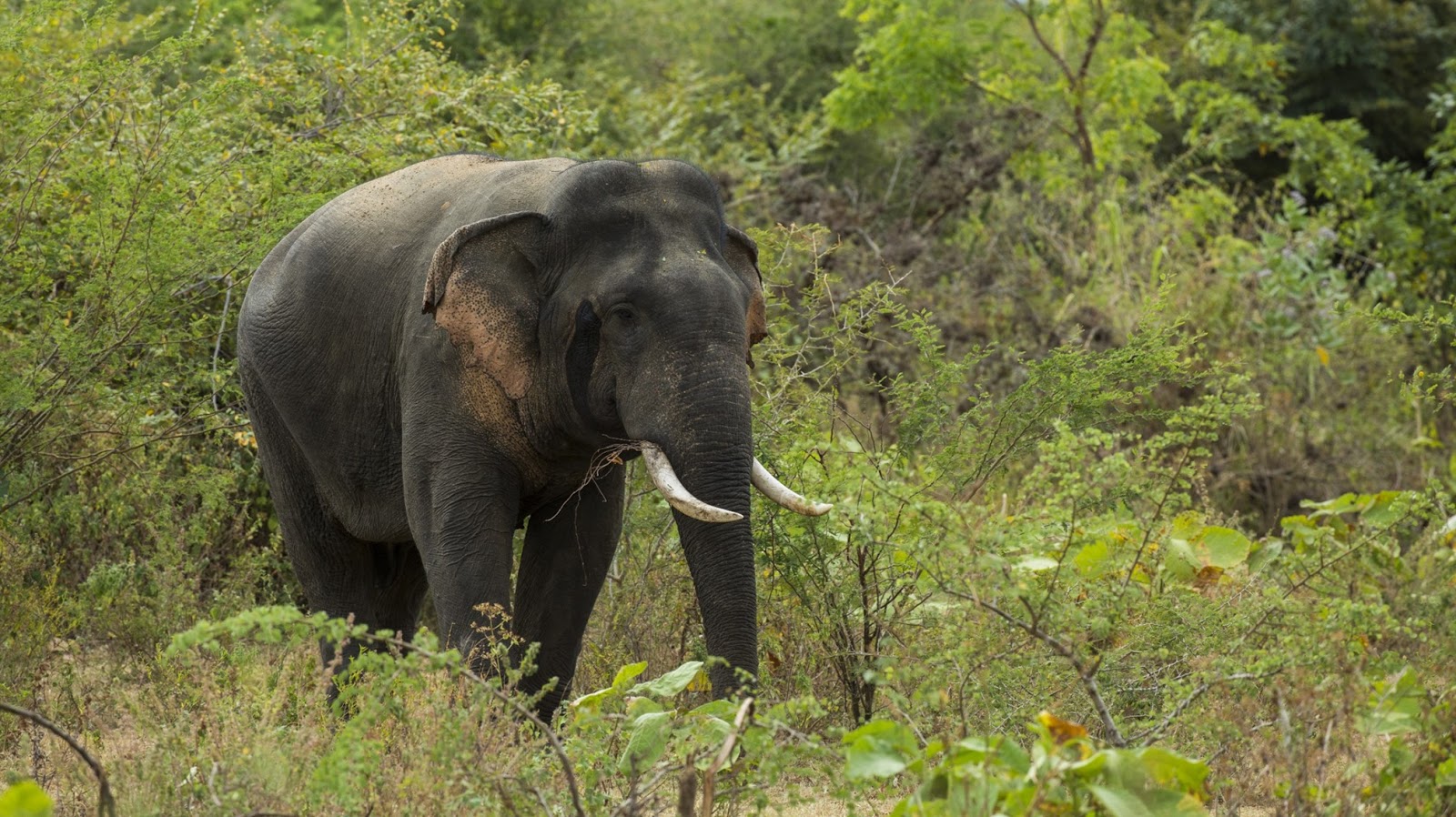 |
| "Tusker" Asian Elephant - Photo © Classic Sri Lanka |
While African Elephants all have tusks, “Tuskers,” or males
with tusks, are a rare occurrence in Sri Lanka, making up only 2% of the entire
elephant population in the country.
Day 7: AM Yala Safari and Tissa Wetlands
We will start early for our second game drive in Yala
National Park. The lagoons are visited by an array of migratory and resident
wading and shorebirds including Eurasian Spoonbill, Painted Stork, Purple
Heron, Great Thick-knee, Black-winged Stilt, Kentish Plover, Pheasant-tailed
Jacana, Indian Pond-Heron, Black-headed Ibis, and many, many more. In the
jungle, we’ll look for Orange-breasted Green Pigeon, Asian Paradise-flycatcher,
bee-eaters, barbets, minivets, and more. Of course, the previously listed
mammals will also be targeted this morning.
 |
| Orange-breasted Green-Pigeon - Photo by Anna Wittmer |
After lunch, we will venture out to the Tissa Wetlands. In
this area, we will look for Brown Fish-Owl, Indian Scops-Owl, and Jungle Owlet
in some local home gardens. Within the wetlands, we will have the opportunity
to see a colony of hundreds of thousands of Indian Flying Foxes, a type of
fruit bat, that roost in the trees around the lake. Birds that reside in the
wetlands include Lesser Whistling-Duck, Gray-headed Swamphen, White-breasted Waterhen,
Asian Openbill, Whiskered Tern, Oriental Darter, White-throated Kingfisher, and
Pheasant-tailed Jacana.
 |
| Jungle Owlet - Photo by Anna Wittmer |
Day 8: Full Day in Yala National Park
Today we will spend a full day on safari in Yala National
Park. This will increase our odds of memorable encounters with Leopards, Sloth
Bear, and tusker elephants. We will also look for primates including Gray
Langur and the endemic Toque Macaque. Along the way, we may come across Mugger
Crocodile, Indian Rock Pythons, and if we’re lucky, maybe even a Spectacled
Cobra! We will continue to bird through out the day as well, hoping to
encounter Common Hoopoe, Indian Peafowl, Lesser Adjutant, Wooly-necked
Stork, and the nation bird: Sri Lanka Junglefowl.
 |
| Mugger Crocodile - Photo by Anna Wittmer |
 |
| Indian Cobra - Photo by Anna Wittmer |
 |
| Gray Langur - Photo by Anna Wittmer |
We will return to our hotel at dusk for a good night’s sleep
before journeying to Nuwara-Eliya in the morning.
Day 9: Transfer to Nuwara-Eliya
We will spend the morning winding our way through hill
country before arriving at our hotel.
We will spend the afternoon bird watching in Victoria Park to
begin looking for a new variety of birds local to this region. These include
Velvet-fronted Nuthatch and Kashmir Flycatcher in addition to highland endemics
such as Yellow-eared Bulbul and Dull-blue Flycatcher.
 |
| Yellow-eared Bulbul - Photo © Classic Sri Lanka |
Day 10: Horton Plains National Park and Hakgala Botanical
Gardens
We will leave early with a packed breakfast to visit the
highest elevated national park in Sri Lanka: Horton Plains National Park. At
7,000 ft above sea level, Horton Plains offers open grassland and cloud forest.
These two diverse habitats are the homes of the endemic Black-lipped Lizard and my personal favorite, the Rhino-horned Lizard. A guided hike will take us to a breath-taking overlook
known as World’s End and past the impressive Baker’s Falls. Horton Plains hosts
the Bear Monkey, the highland race of Purple-faced Leaf Monkey, and many endemic
birds.
 |
| Indian Brown Mongoose - Photo by Anna Wittmer |
 |
| Indian Fritilary - Photo by Anna Wittmer |
 |
| Rhino-horned Lizard - Photo by Anna Wittmer |
 |
| Horton Plains National Park - Photo by Anna Wittmer |
 |
| Horton Plains National Park - Photo by Anna Wittmer |
In the afternoon, we will explore the unique plants and
trees of Hakgala Botanical Gardens and do some casual bird watching. The second
largest botanical garden in Sri Lanka, Hakgala has been planted with
subtropical and temperate plants since the late 1800s. There are over 10,000 species
of plants with the most famous being the variety of orchids and roses. The
gardens also offer good habitat for the shaggy Bear Monkeys.
 |
| Bear Monkey - Photo by Anna Wittmer |
We will return to our hotel for a delicious Sri Lankan
dinner.
Day 11: Transfer to Kandy for our last full day in Sri
Lanka.
Today we will travel to Kandy, the historic capital from the
ancient kings’ era of Sri Lanka. This large city is surrounded by mountains and
tea plantations and famous for its sacred Buddhist sites including the Temple
of the Tooth Shrine.
 |
| Giant Flying Squirrel - Photo by Anna Wittmer |
We will spend the evening exploring the beautiful property
of the Tree of Life Nature Resort. We will try to spot the incredibly elusive
Giant Flying Squirrel, while we enjoy our last chances for endemic birds such
as the Sri Lanka Hanging-Parrot, Sri Lanka Green-Pigeon, Sri Lanka Gray
Hornbill, Sri Lanka Bush Warbler, and Yellow-fronted Barbet. We may even have a
chance to relax poolside this last night in Sri Lanka.
Day 12: Transfer to Colombo for PM return flights
Upon checkout from our hotel, we will make our final journey
back to Colombo to catch flights back home. Evening flights should be arranged.
 |
| My partner, Saranga with the national bird: Sri Lanka Junglefowl - Photo by Anna Wittmer |
Tour Cost:
2-3 people - $4,200 each
4-5 people - $3,800
6 people - $3,600
Single Room Supplement: $550
Cost includes: Naturalist and Local Guide, Driver and All Ground Transportation, Accommodations, Meals, Bottled Water, and All Government Taxes. You will also receive a complete checklist of the wildlife of Sri Lanka that we will routinely update, and access to shared eBird checklists from our journey together.
Cost Excludes: Airfare, Tips, Souvenirs and Items of Personal Nature, and Alcoholic Beverages
Accommodation Details:
Negombo:
Goldi Sands (1 Night)
AC and Wifi Available
Mirissa:
Mandara Resort (1 Night)
AC and Wifi Available
Sinharaja:
Blue Magpie Lodge (2 Nights)
Wifi Available
Udawalawe:
Centuria Wild (1 Night)
AC and Wifi Available
Yala:
(3 Nights)
Nuwara-Eliya:
Heaven Seven (2 Nights)
Wifi Available
Kandy:
Tree of Life Nature Resort (1 Night)
AC
 |
| Me, birding in Sri Lanka - Photo by Saranga Dissanayake |